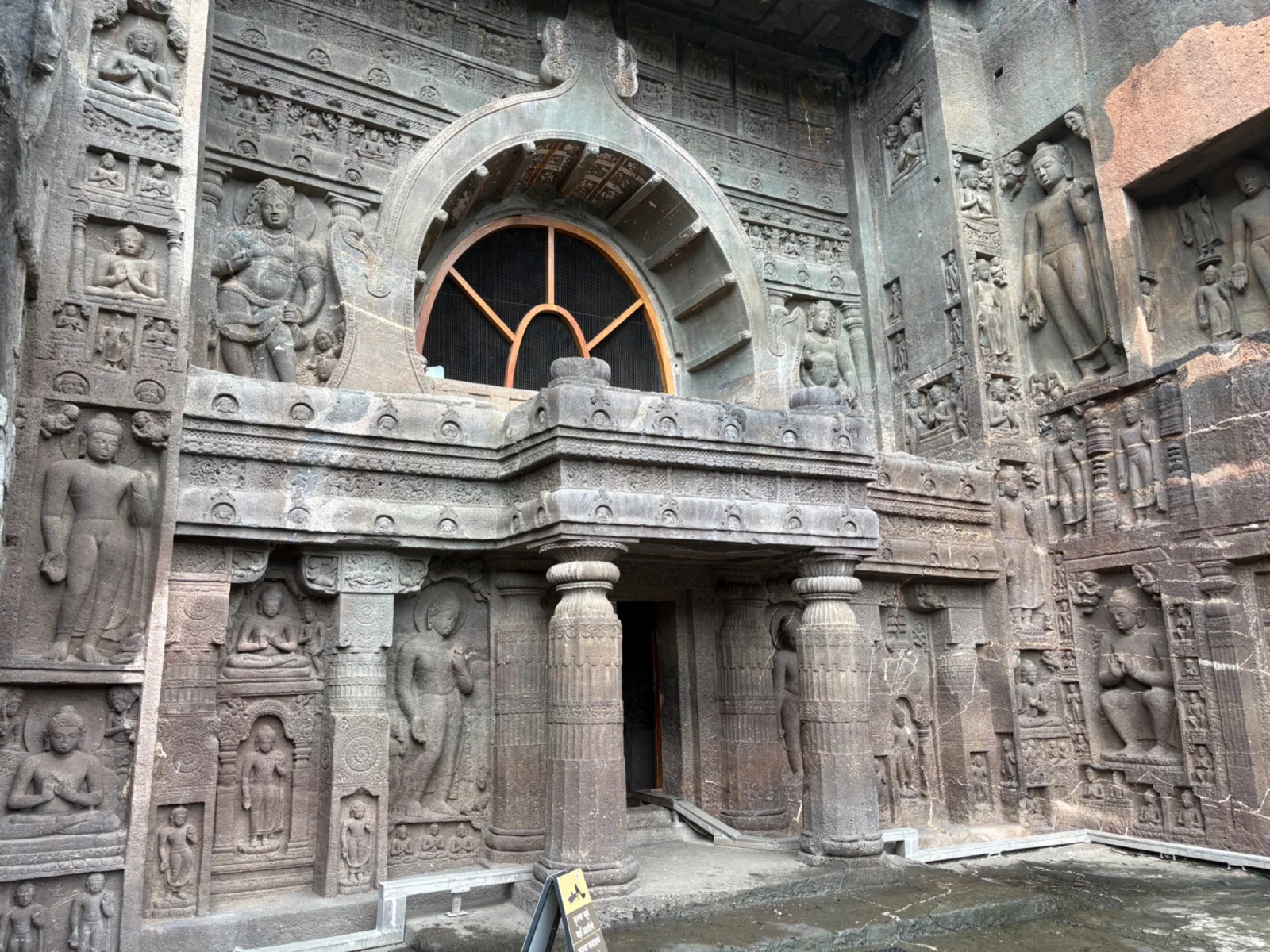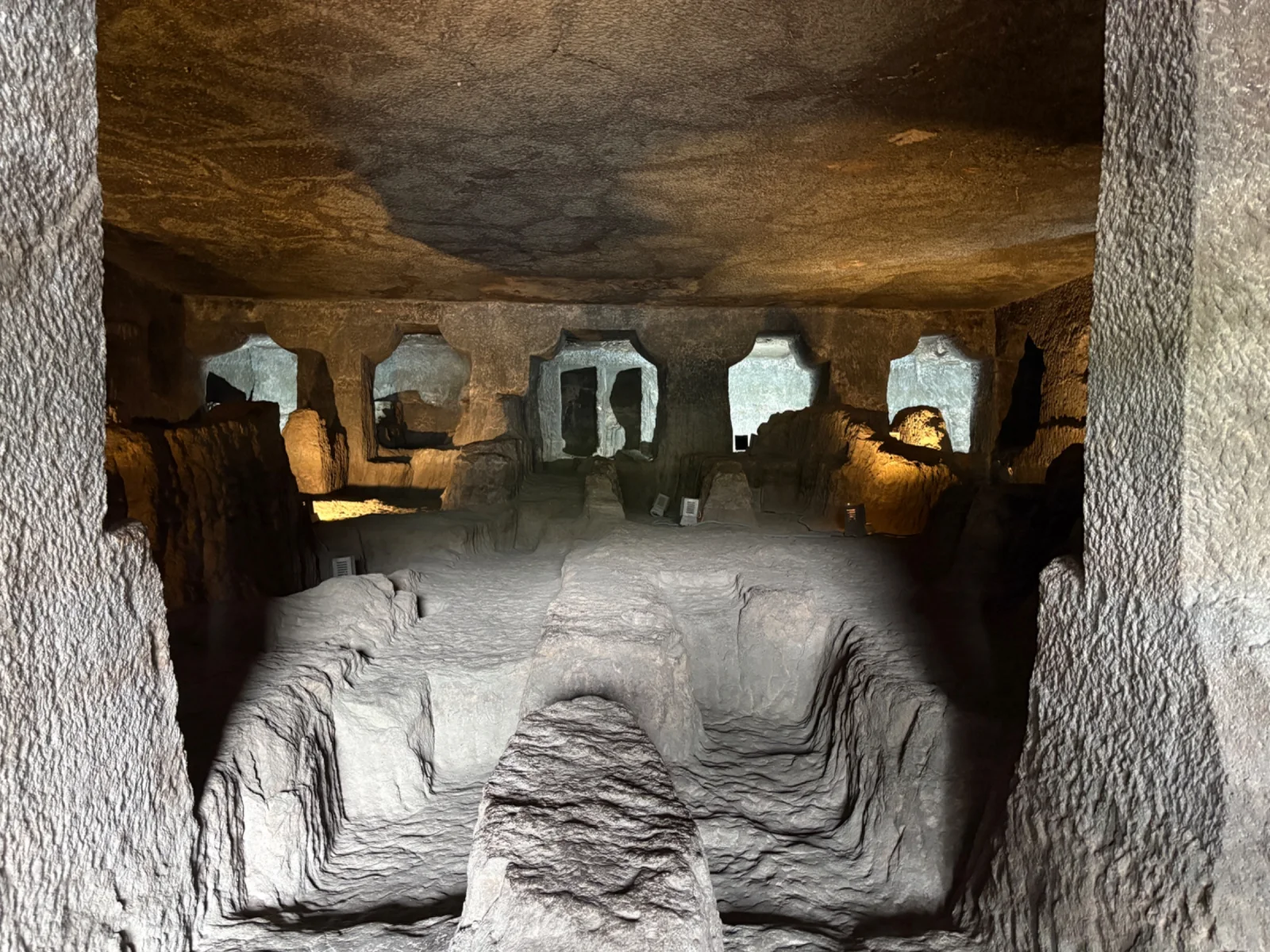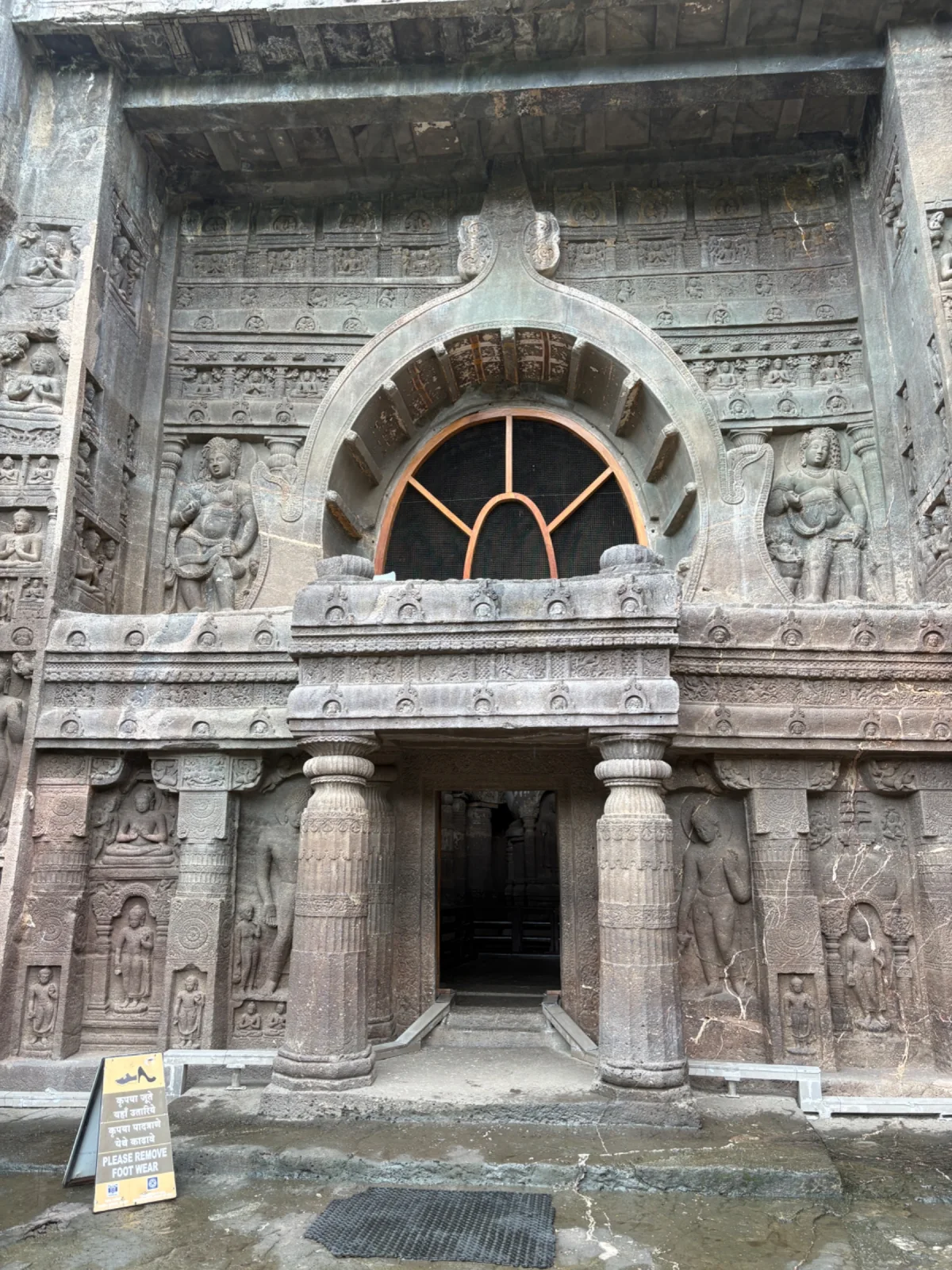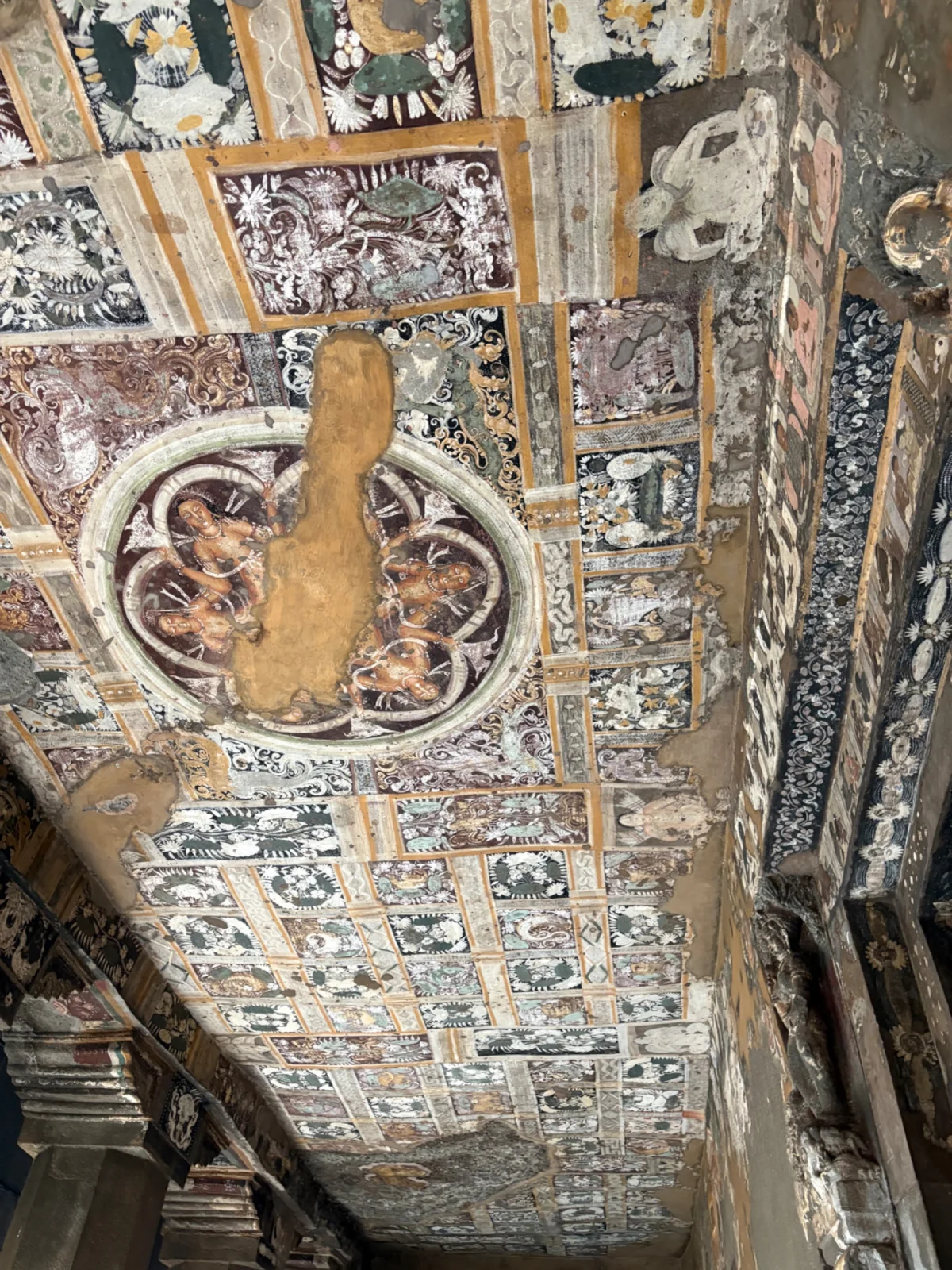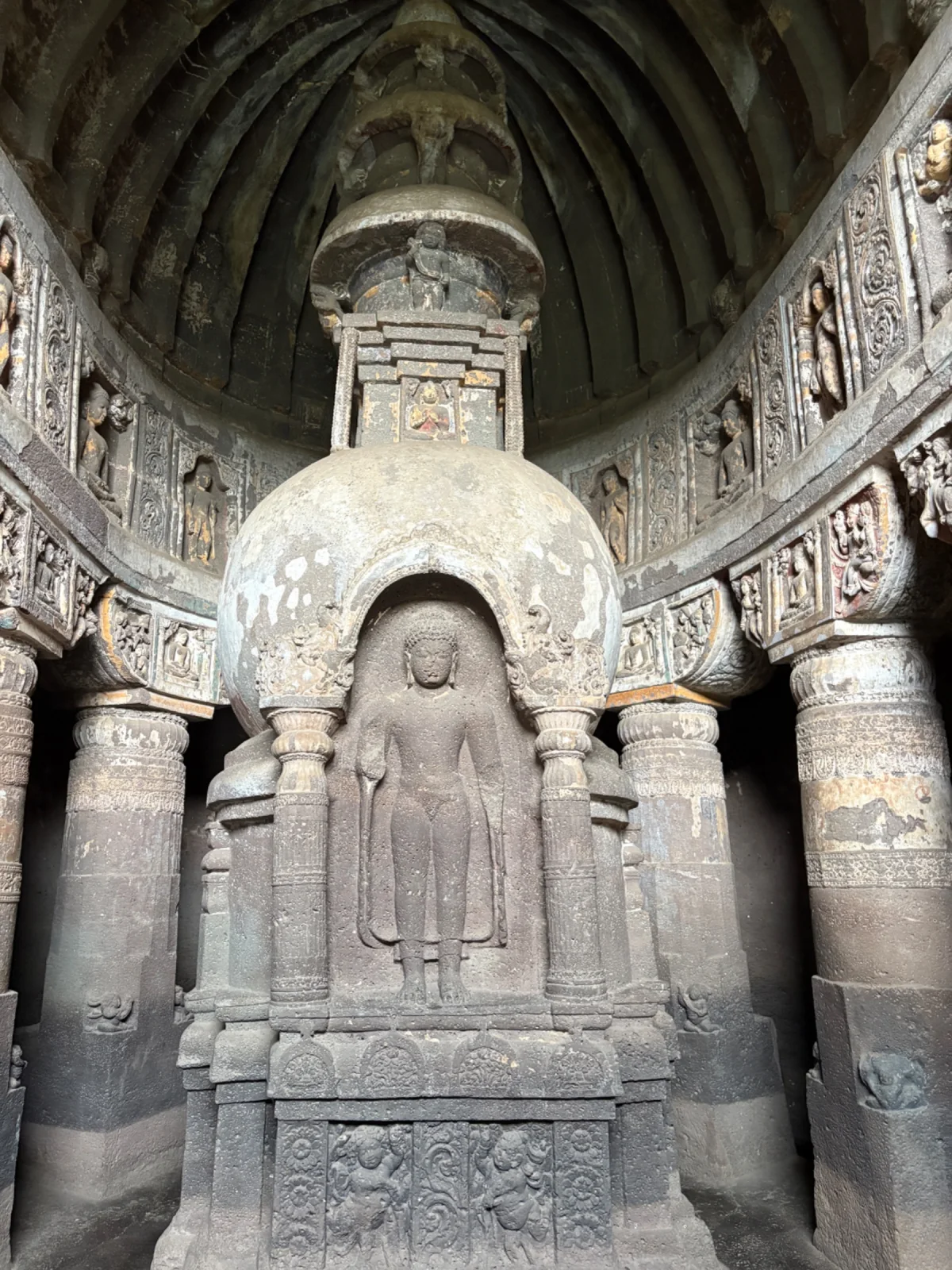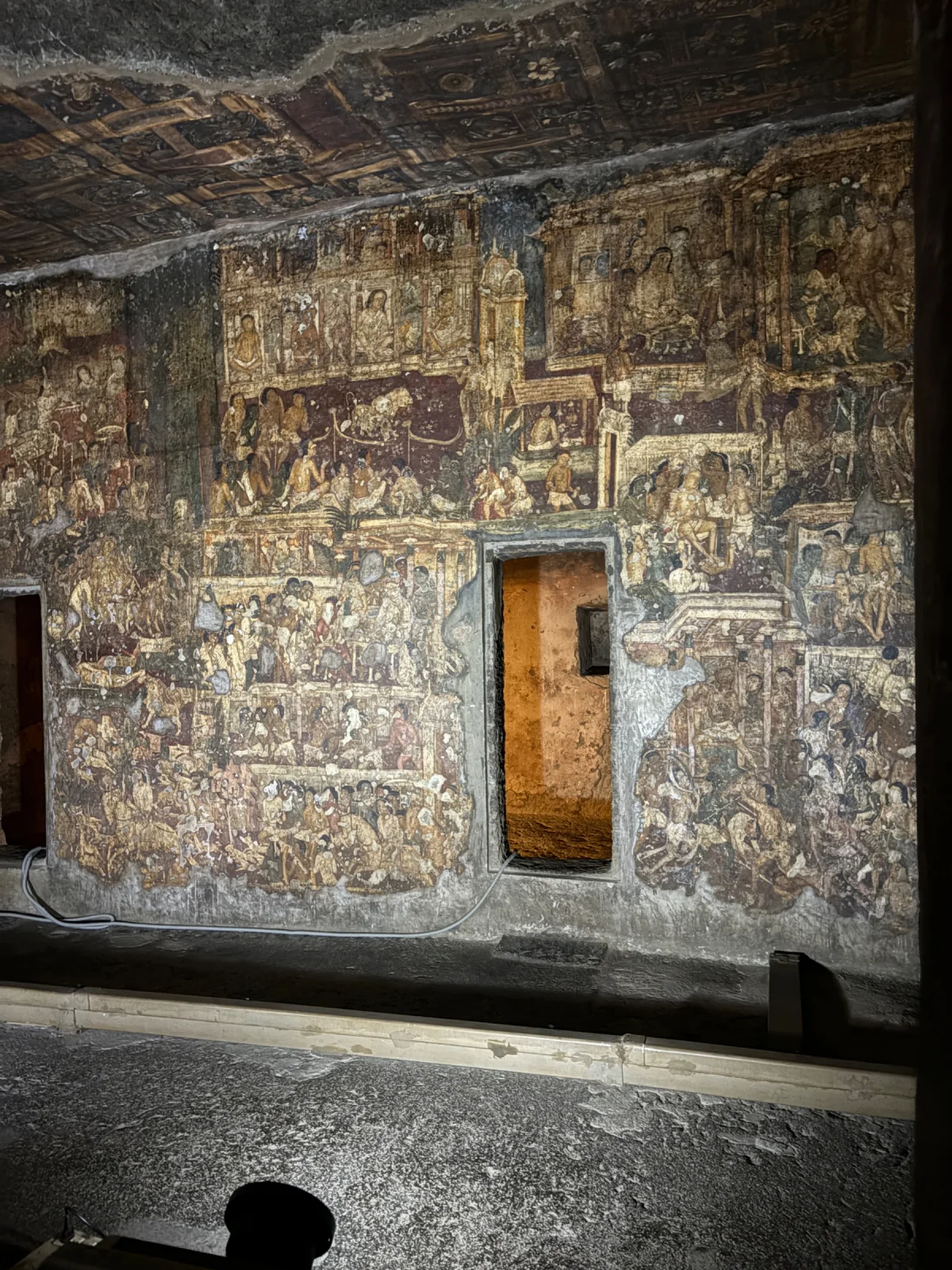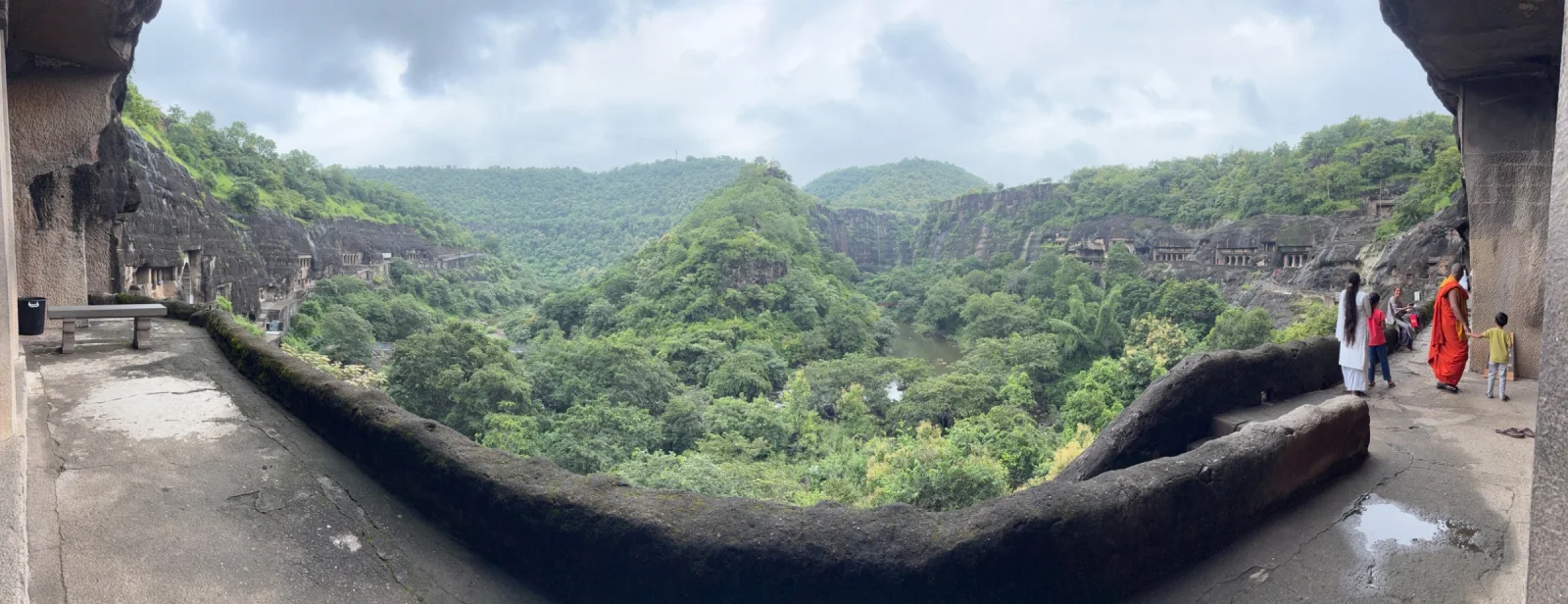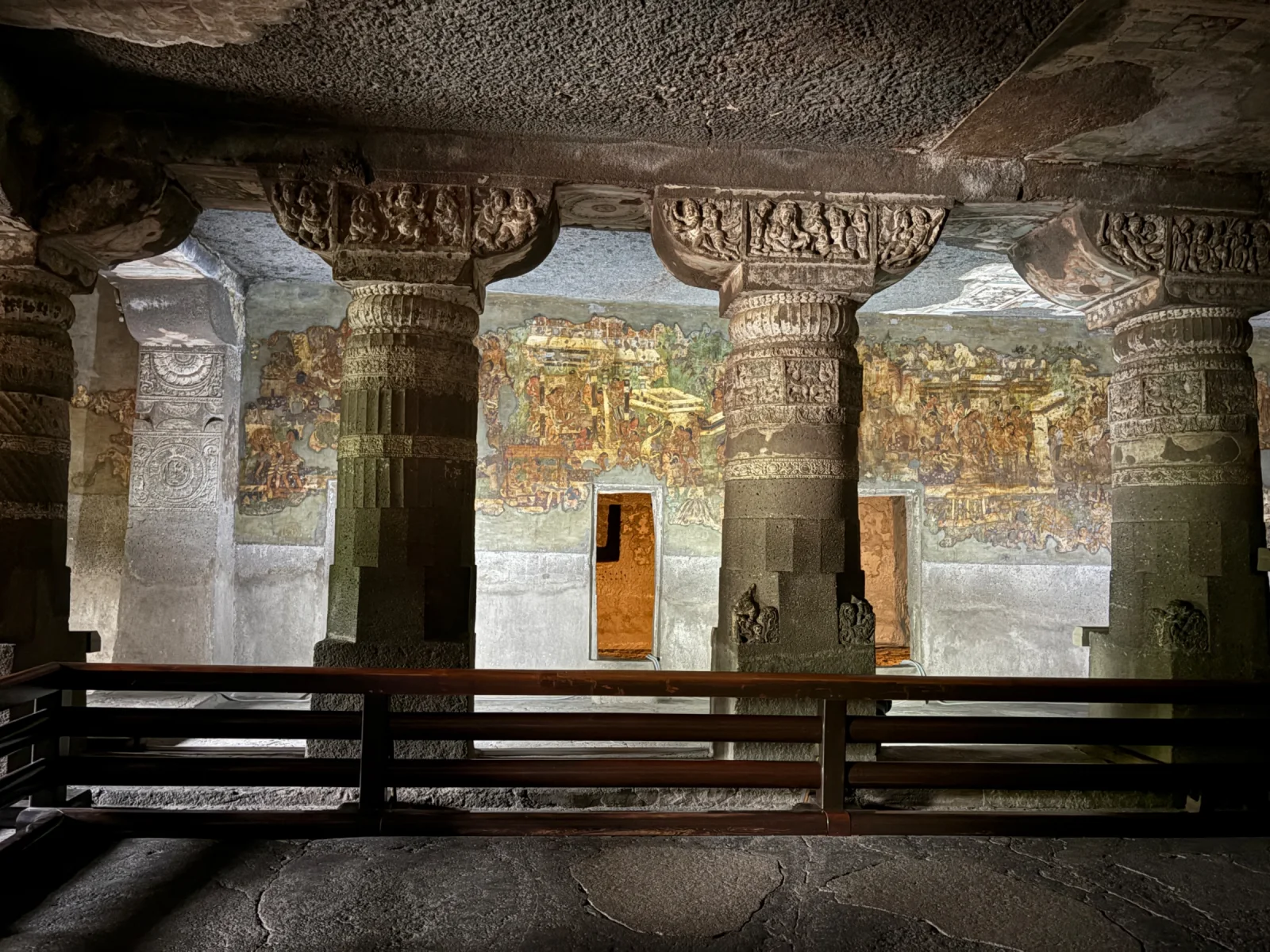
The rock-cut caves of Ajanta and Ellora, near Aurangabad (now Chhatrapati Sambhajinagar) in Maharashtra, are among the greatest treasures of Indian art. Both were declared UNESCO World Heritage Sites in 1983. They are about 100 km apart and are usually visited on two separate days from Aurangabad.
Ajanta Caves
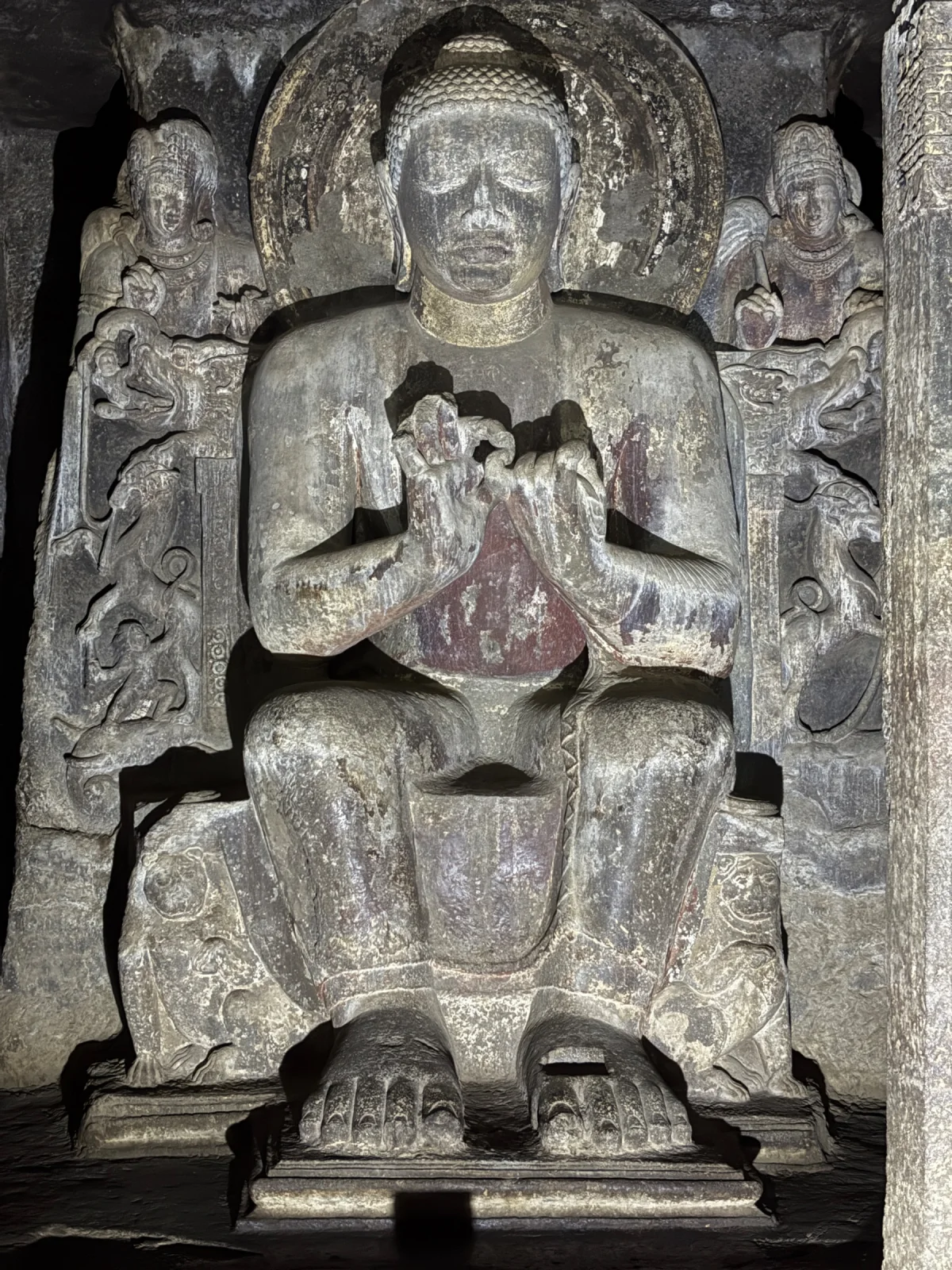
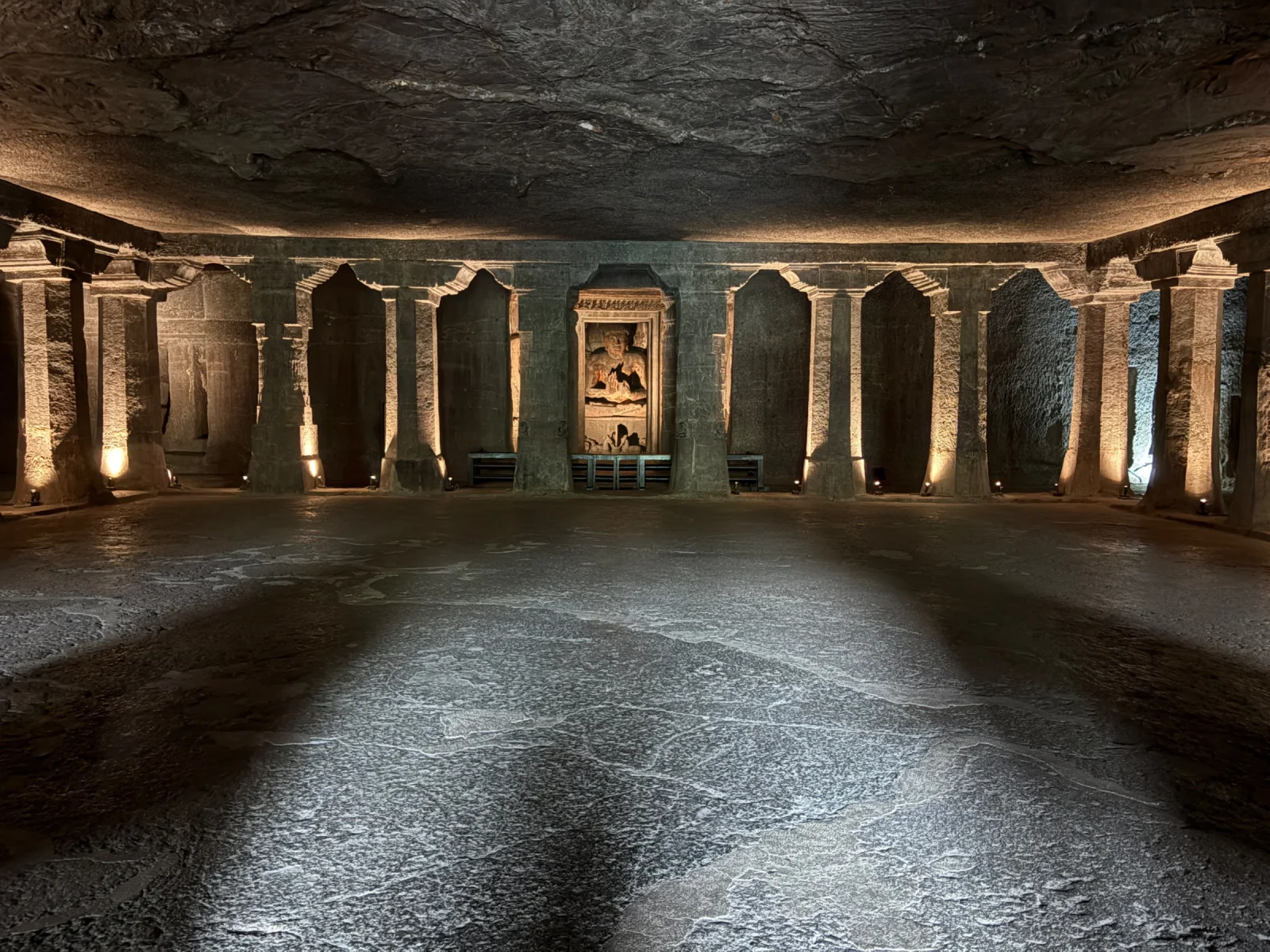
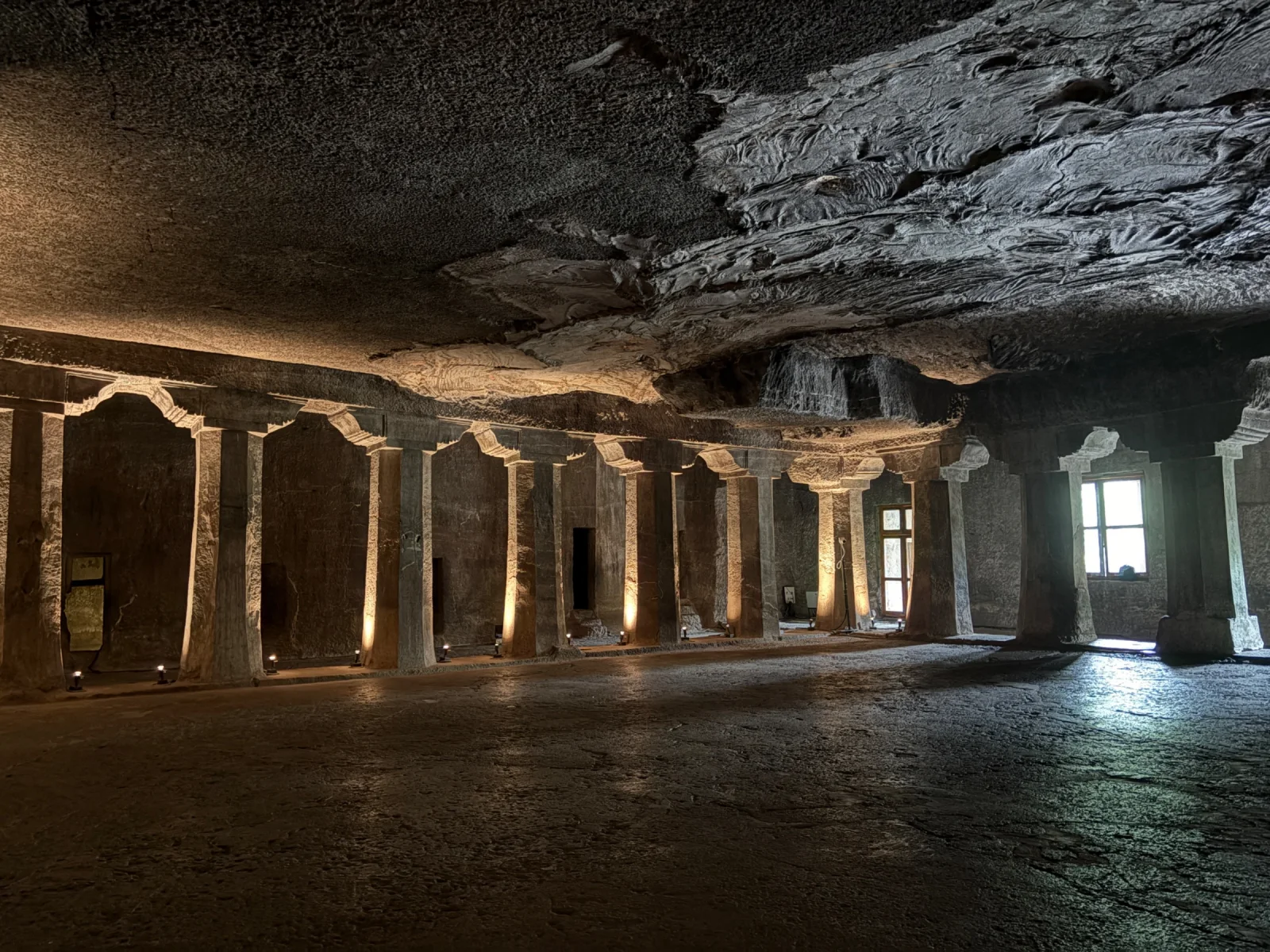
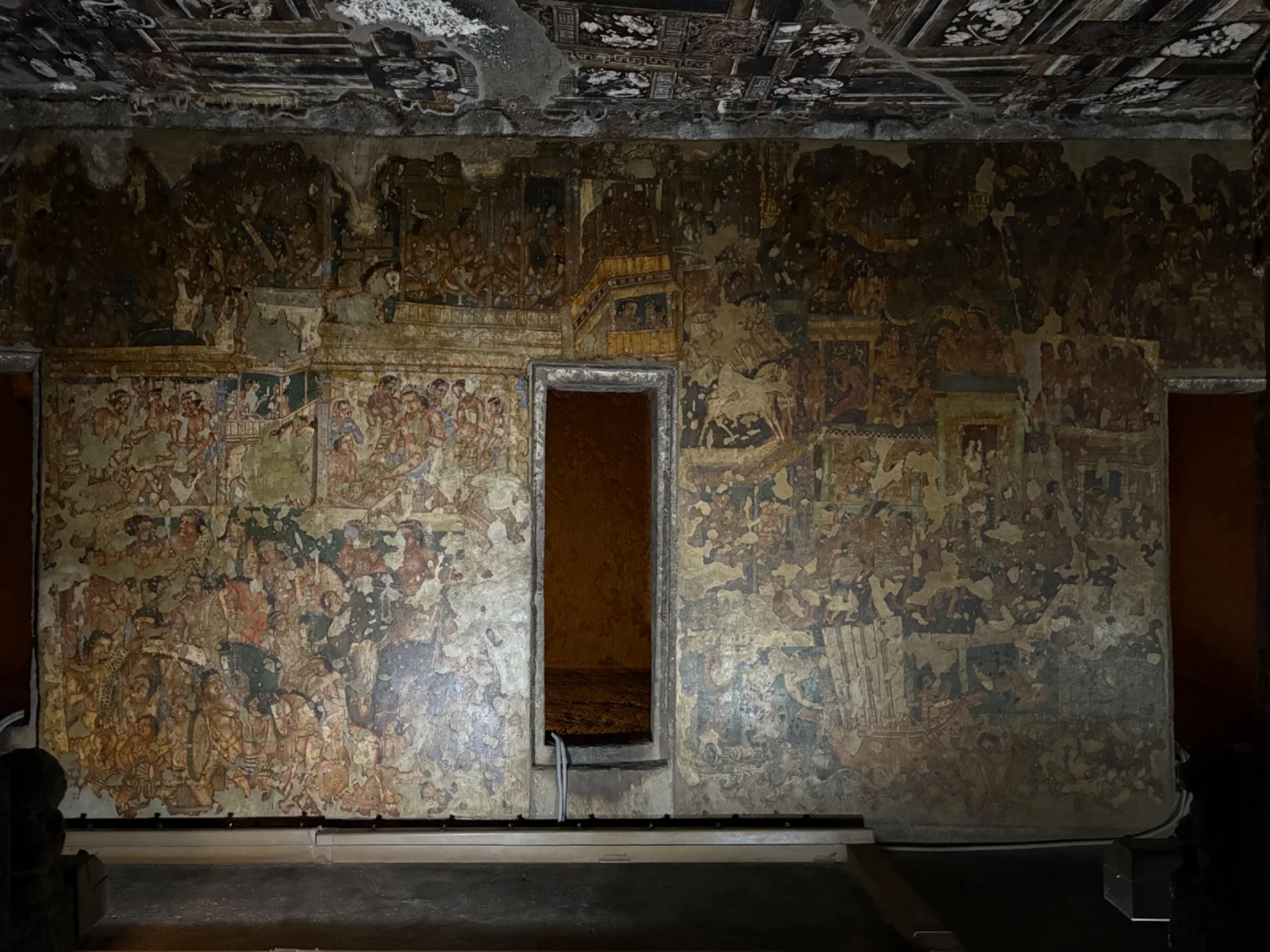
The 30 Buddhist caves of Ajanta are cut into a horseshoe-shaped cliff above the Waghur river. They were made in two phases, from around the 2nd century BCE and again in the 5th century CE, and include prayer halls (chaityas) and monasteries (viharas). Ajanta is famous above all for its wall paintings, which tell the life of the Buddha and the Jataka tales with great grace and detail – the best surviving examples of ancient Indian painting. Forgotten for centuries, the caves were rediscovered in 1819 by a British officer on a tiger hunt.
Ellora Caves
Ellora has 34 caves carved between about the 6th and 10th centuries, belonging to three religions: Buddhist, Hindu and Jain – a sign of the tolerance of the period. The highlight is the Kailasa Temple (Cave 16), built in the 8th century under the Rashtrakuta king Krishna I. It is not built but carved: a whole temple, with courtyards, elephants and towers, cut from the top down out of a single mass of rock. It is the largest monolithic rock-cut structure in the world.
Good to know:
Ajanta is usually closed on Mondays and Ellora on Tuesdays – please plan your days accordingly. Flash photography is not allowed in the painted caves. Comfortable shoes are useful, as there are many steps. Aurangabad can be reached by air or train from Mumbai and Delhi.