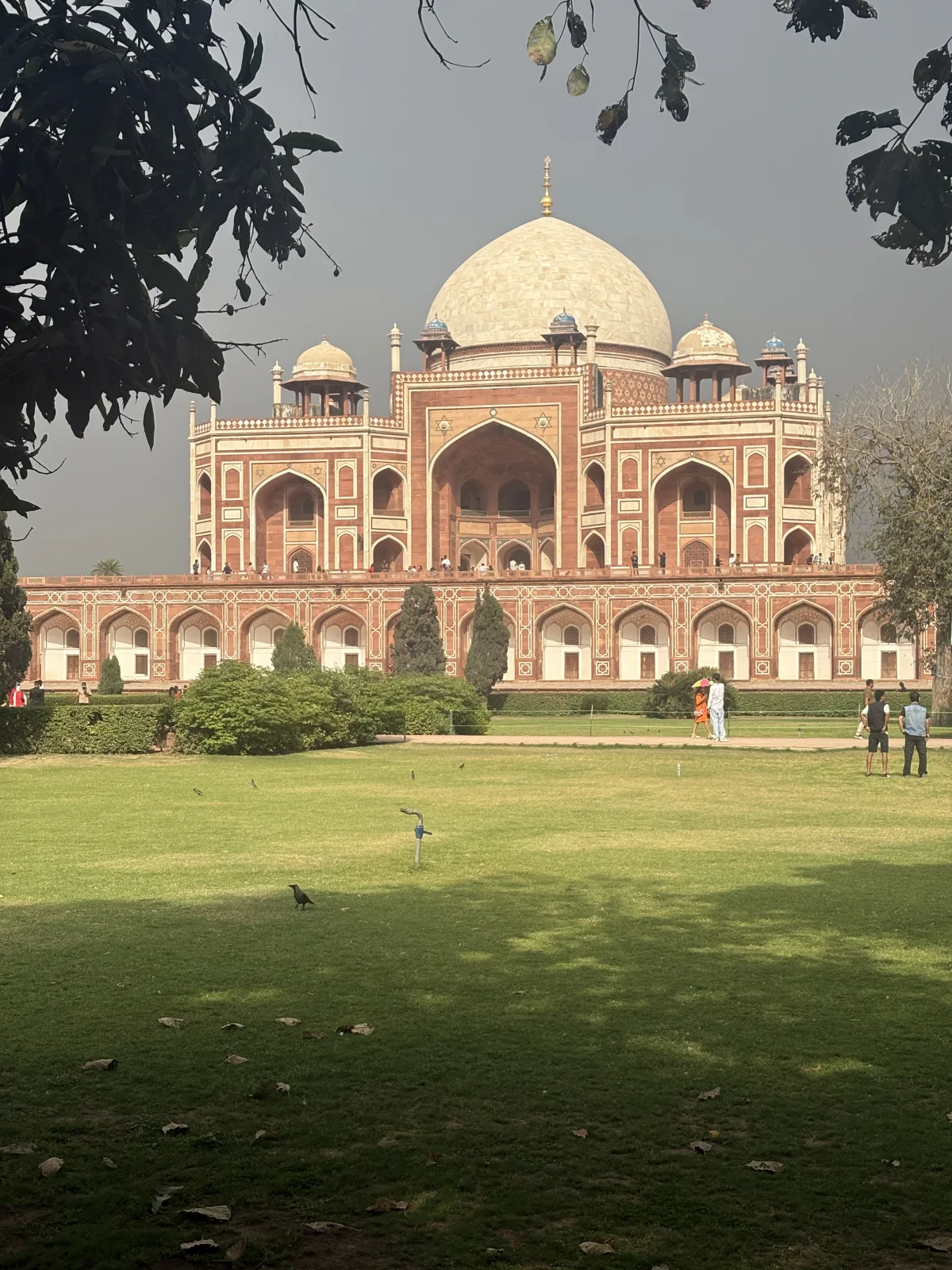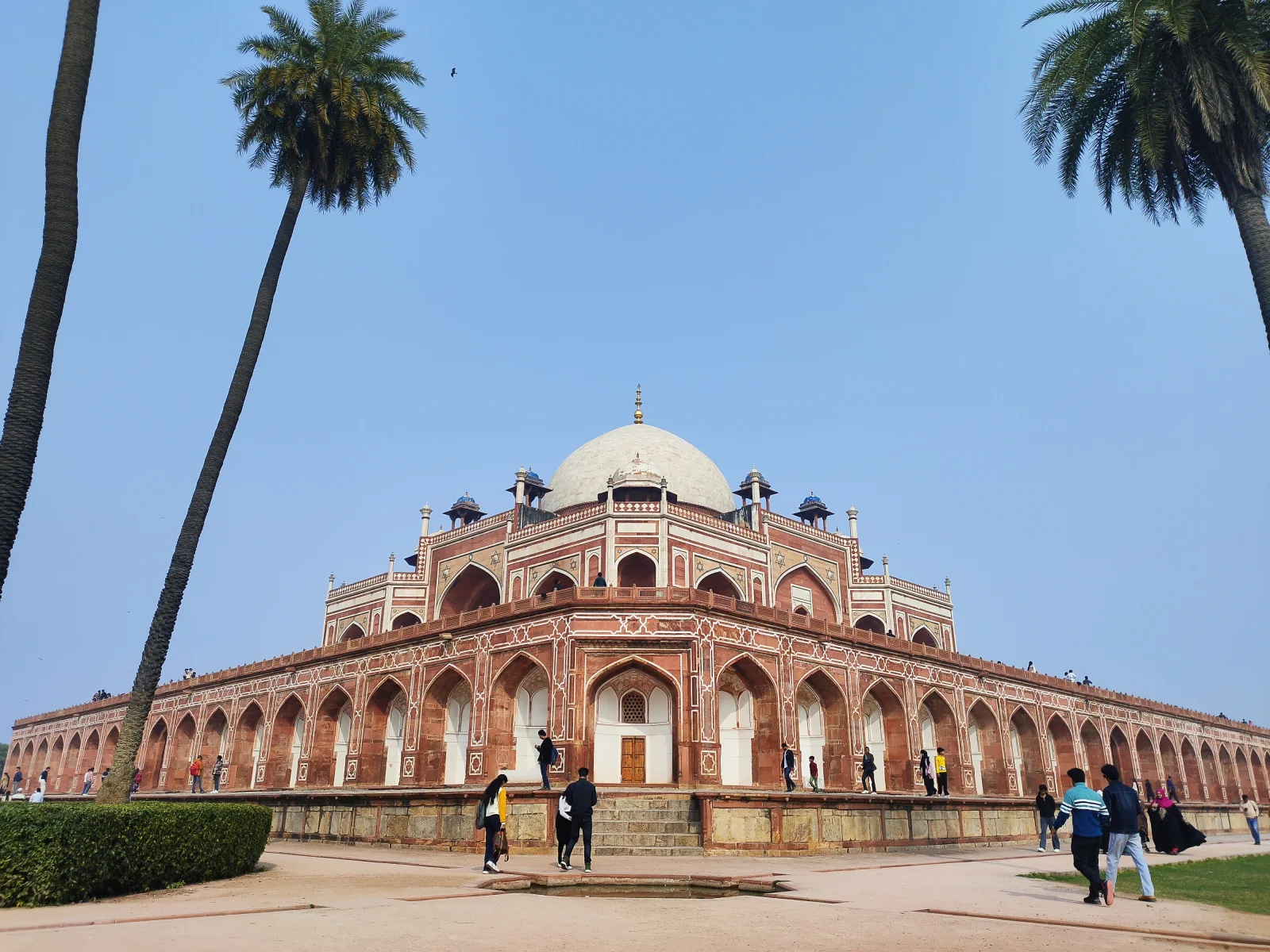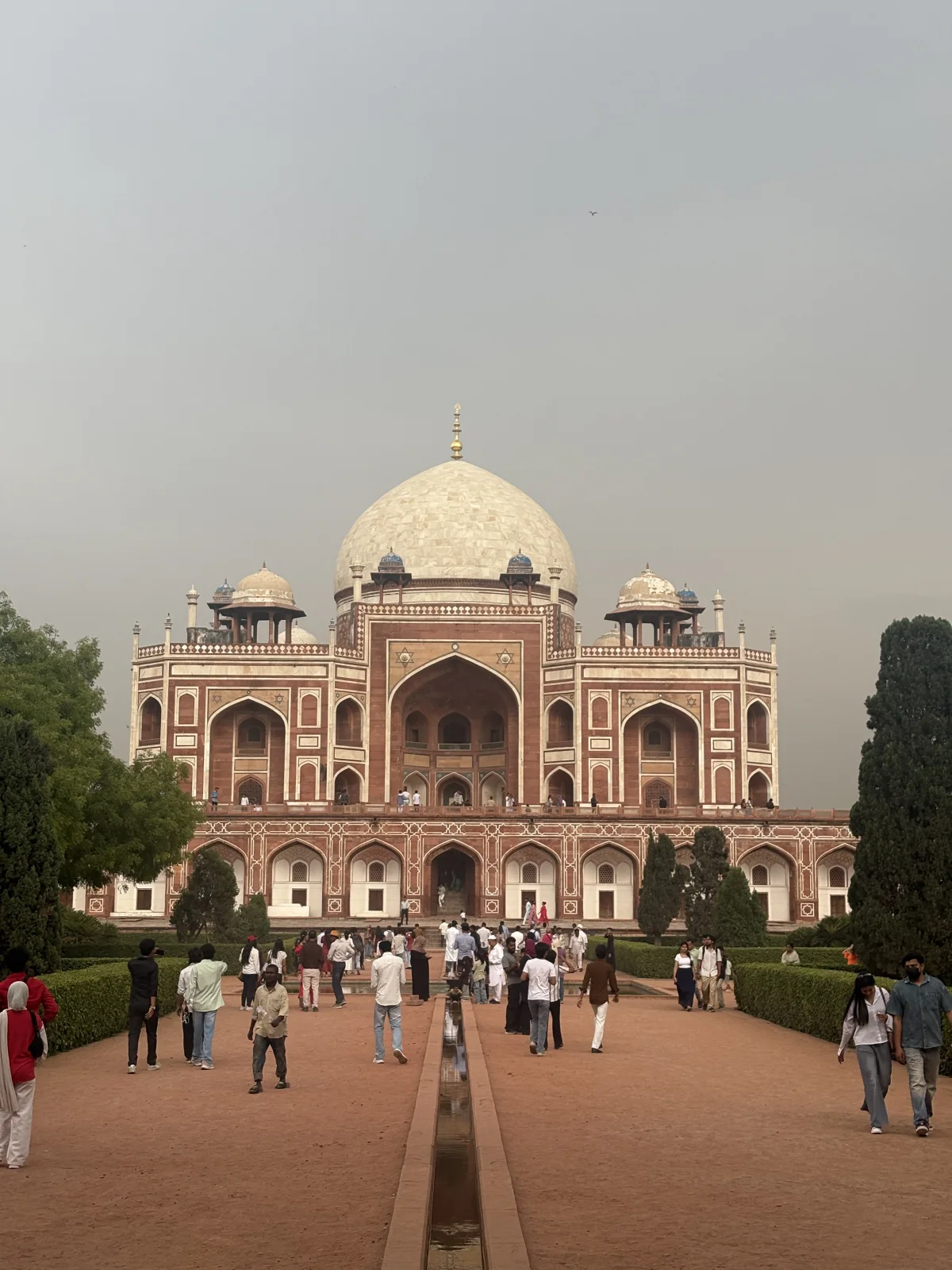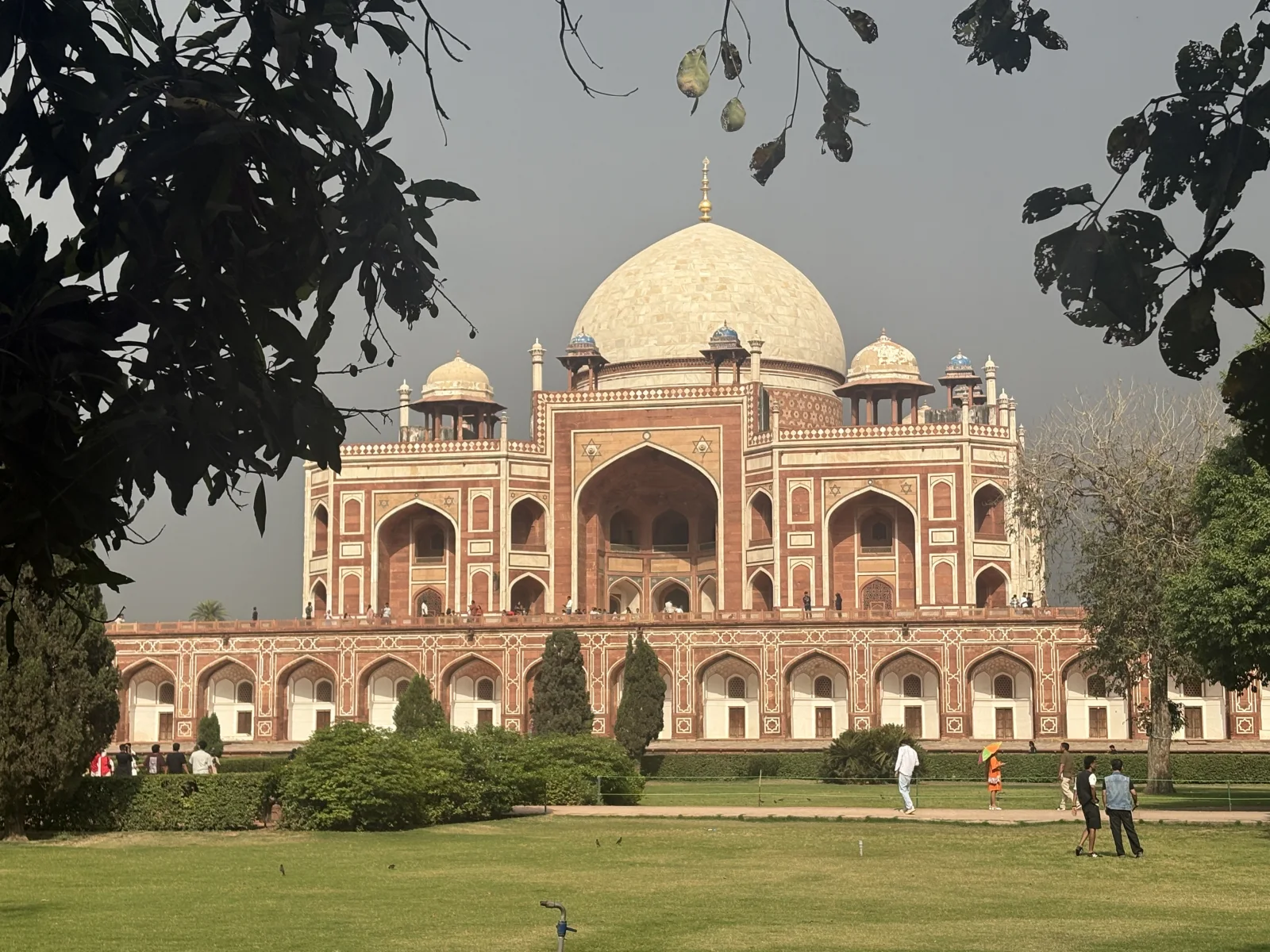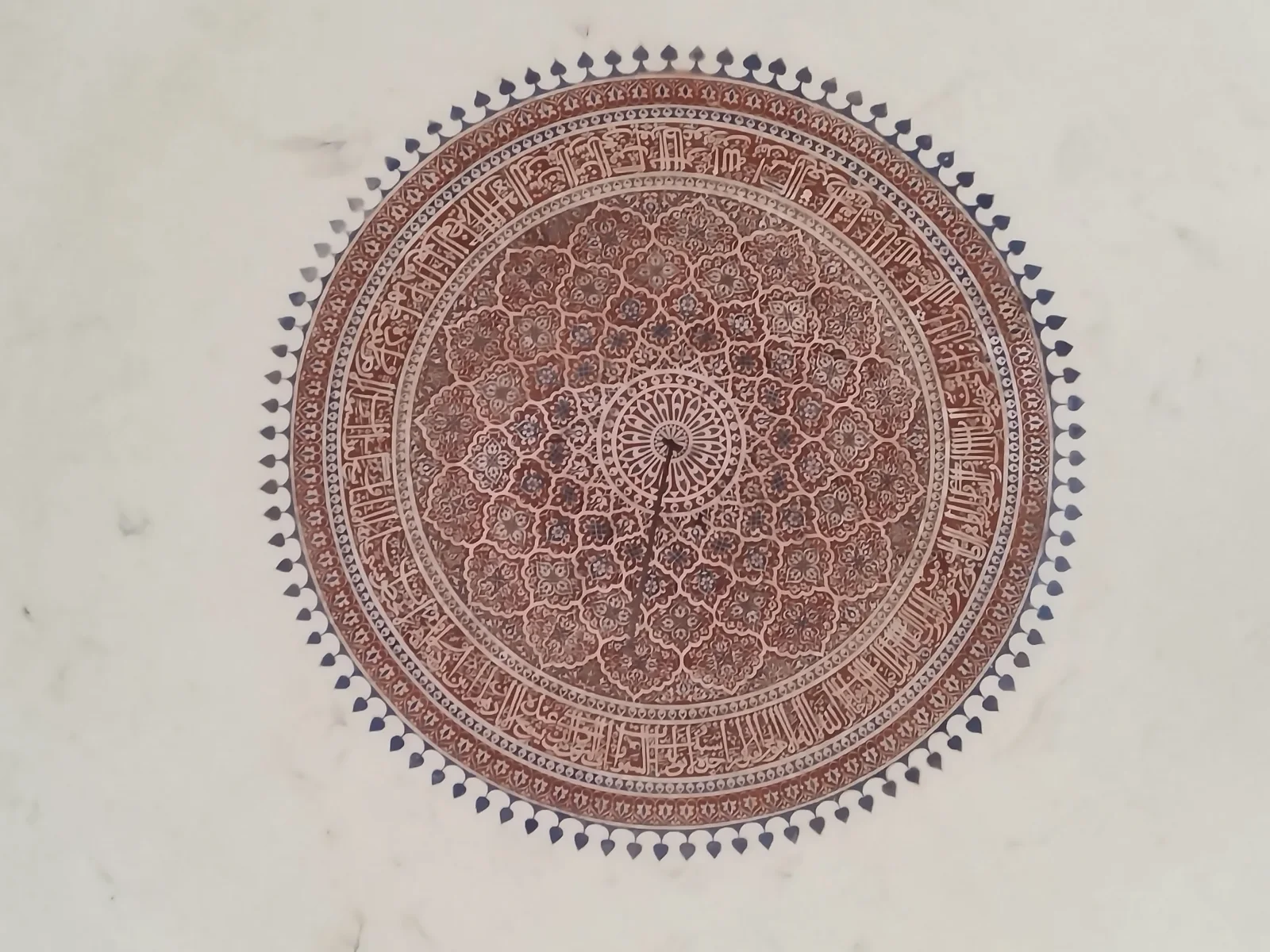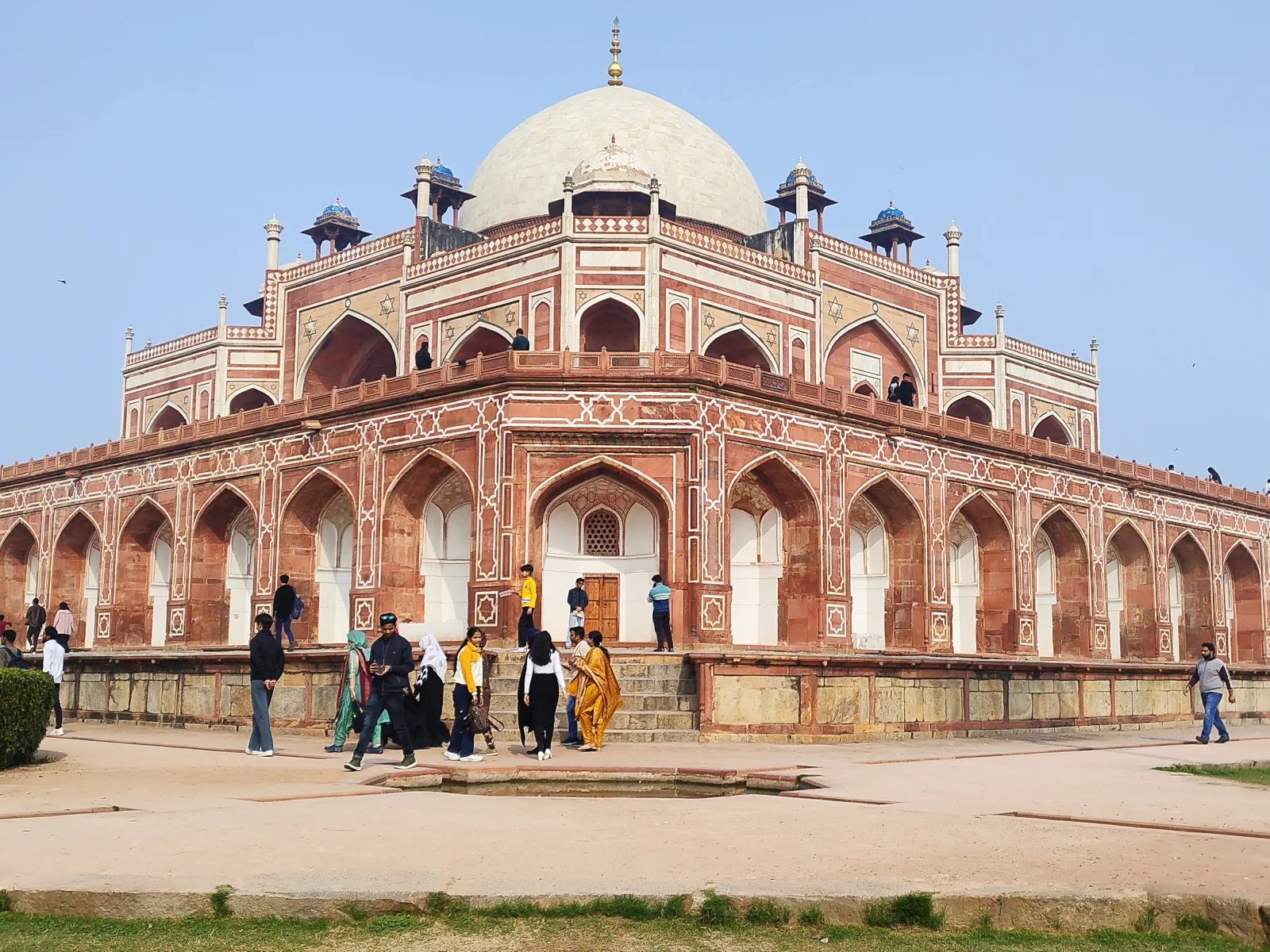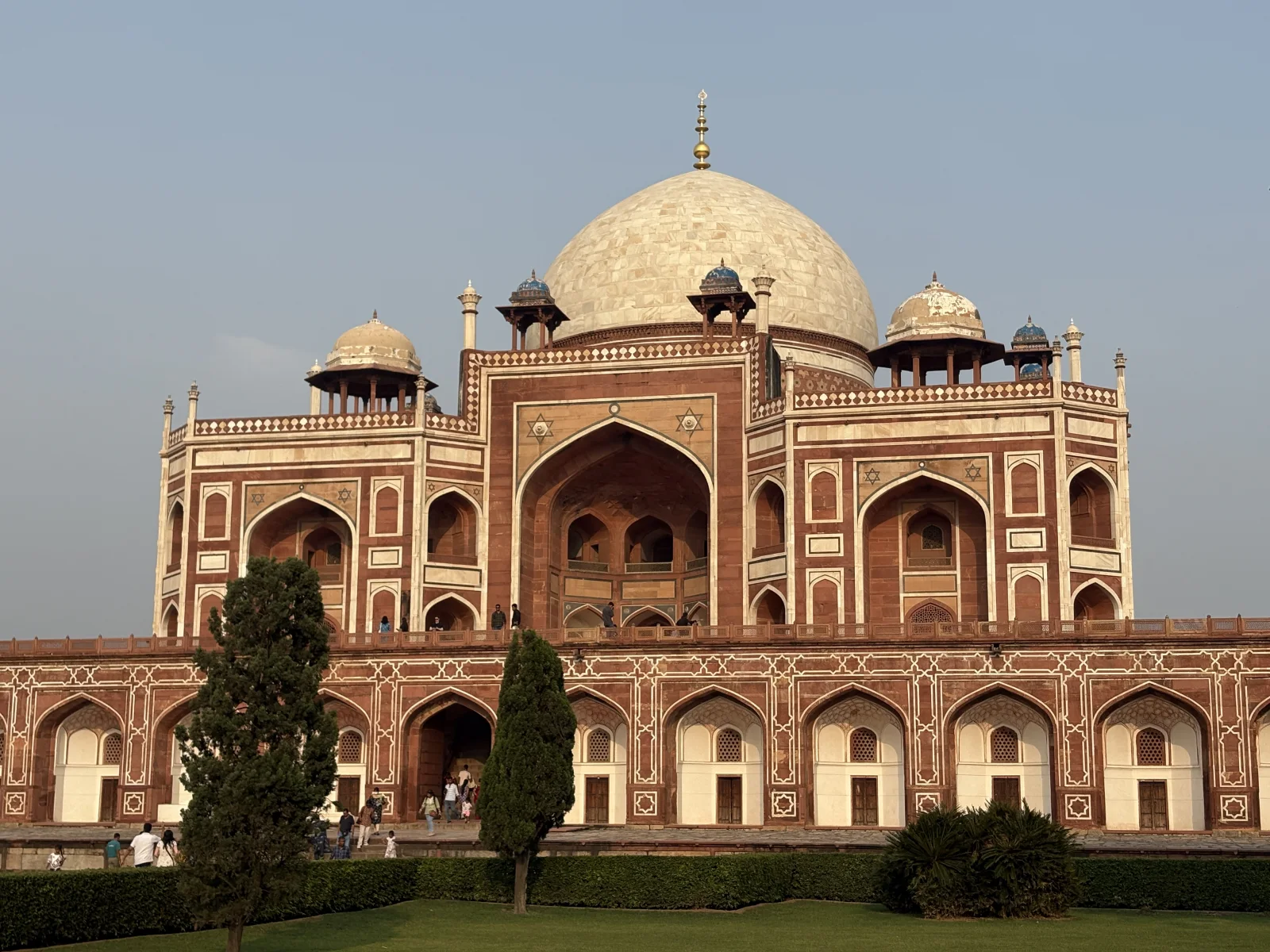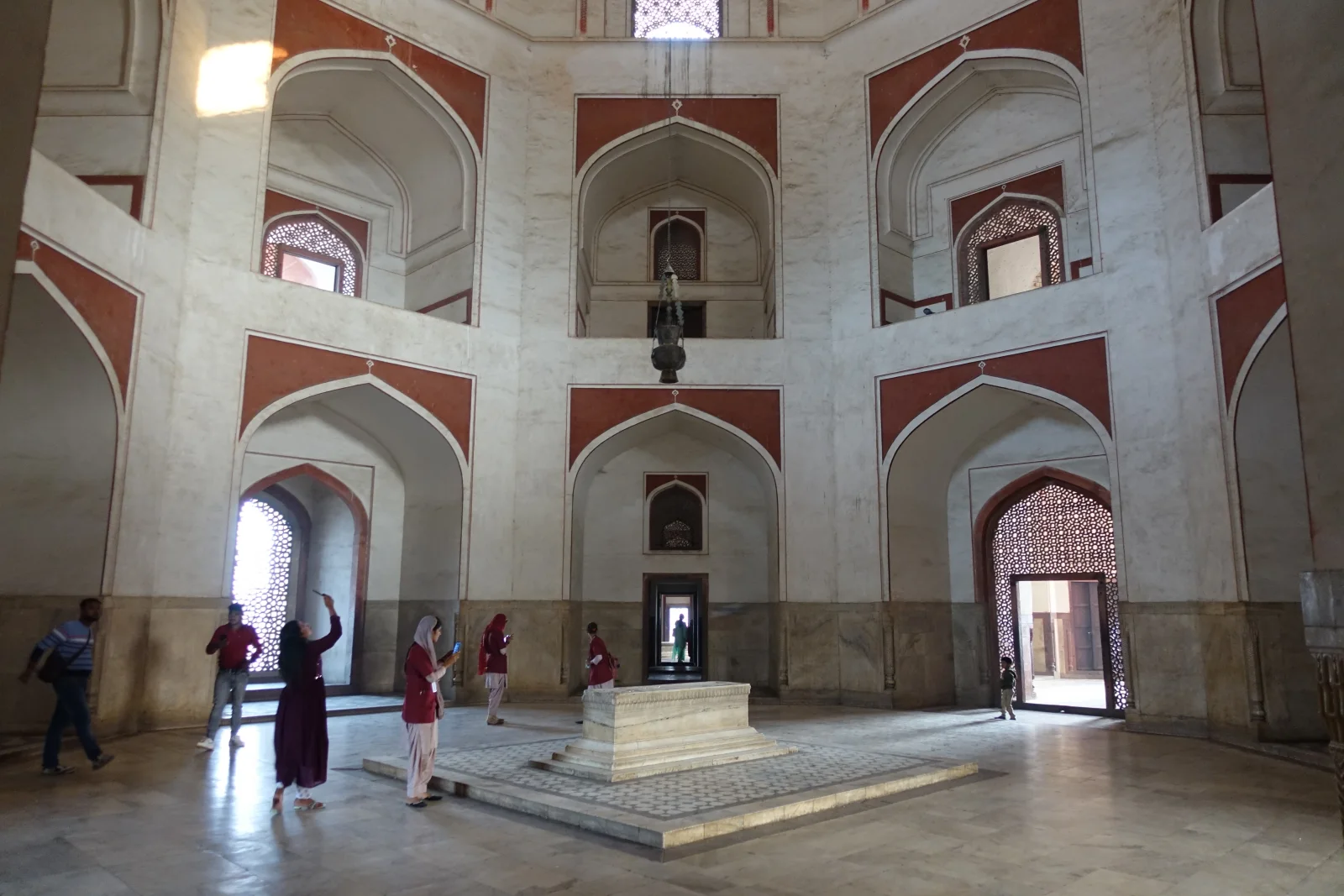
Humayun's Tomb in Nizamuddin, Delhi, is one of the finest Mughal monuments in India and a UNESCO World Heritage Site since 1993. Built in the 1560s, more than 80 years before the Taj Mahal, it was the first grand garden tomb of the Indian subcontinent and set the pattern that Mughal architecture would follow for the next century.
History:
The tomb was commissioned after the death of the second Mughal emperor, Humayun, in 1556, by his widow Bega Begum. It was designed by the Persian architect Mirak Mirza Ghiyas and completed around 1572, during the reign of Humayun's son Akbar. Many members of the Mughal family were later buried here, which is why the tomb is often called the "dormitory of the Mughals".
Architecture:
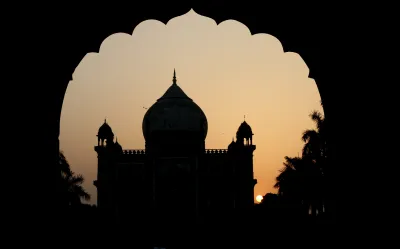
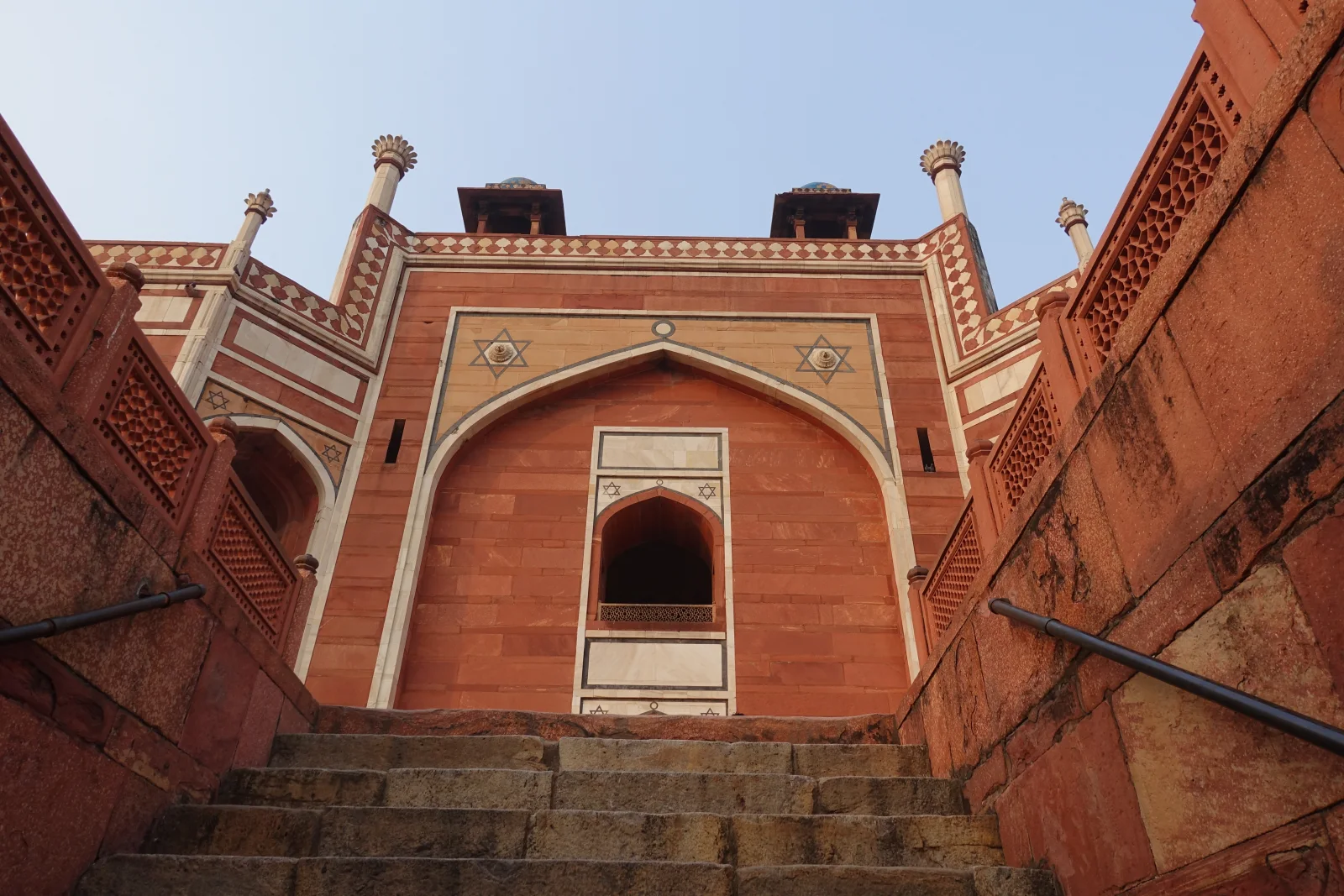
The mausoleum stands on a high platform in the centre of a charbagh – a Persian-style garden divided into four parts by water channels and walkways. Built of red sandstone with white marble inlay and crowned by a double dome, it combines Persian proportions with Indian details such as chhatris (small domed pavilions). Walking from the gate along the central channel towards the tomb, it is easy to see why it is called the forerunner of the Taj Mahal.
What to see in the complex:
- The main mausoleum with the cenotaph of Humayun and the graves of later Mughals.
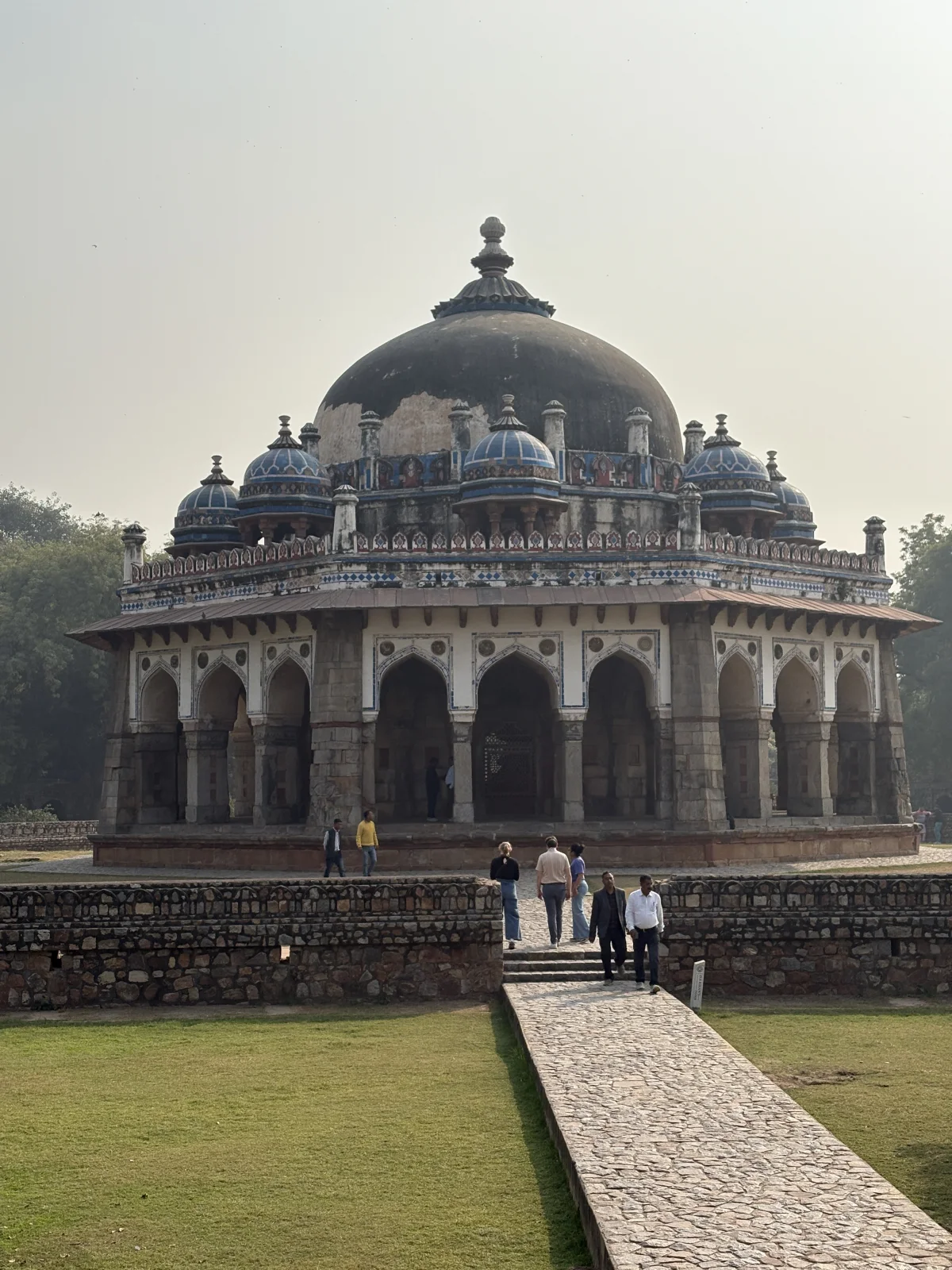
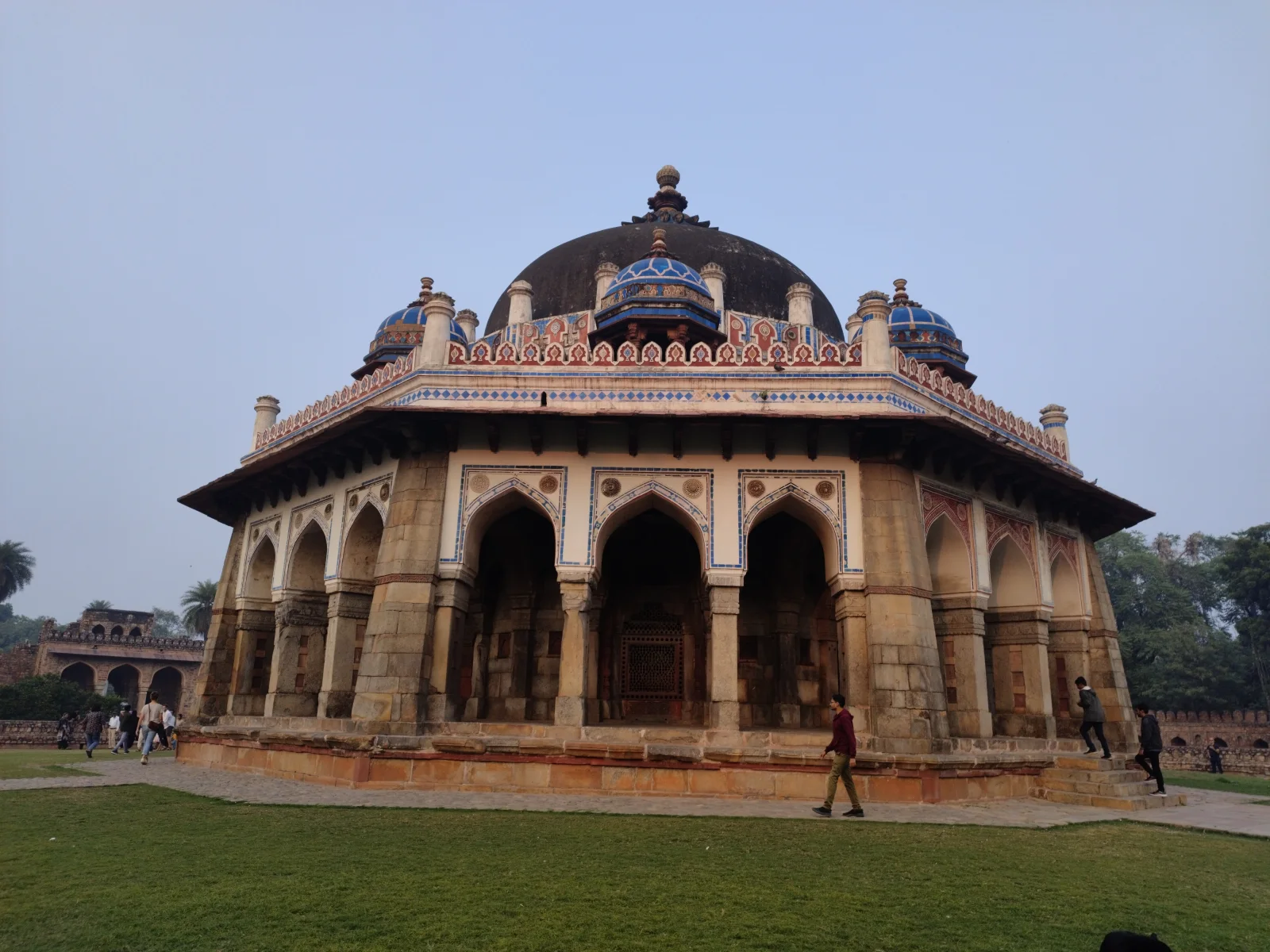
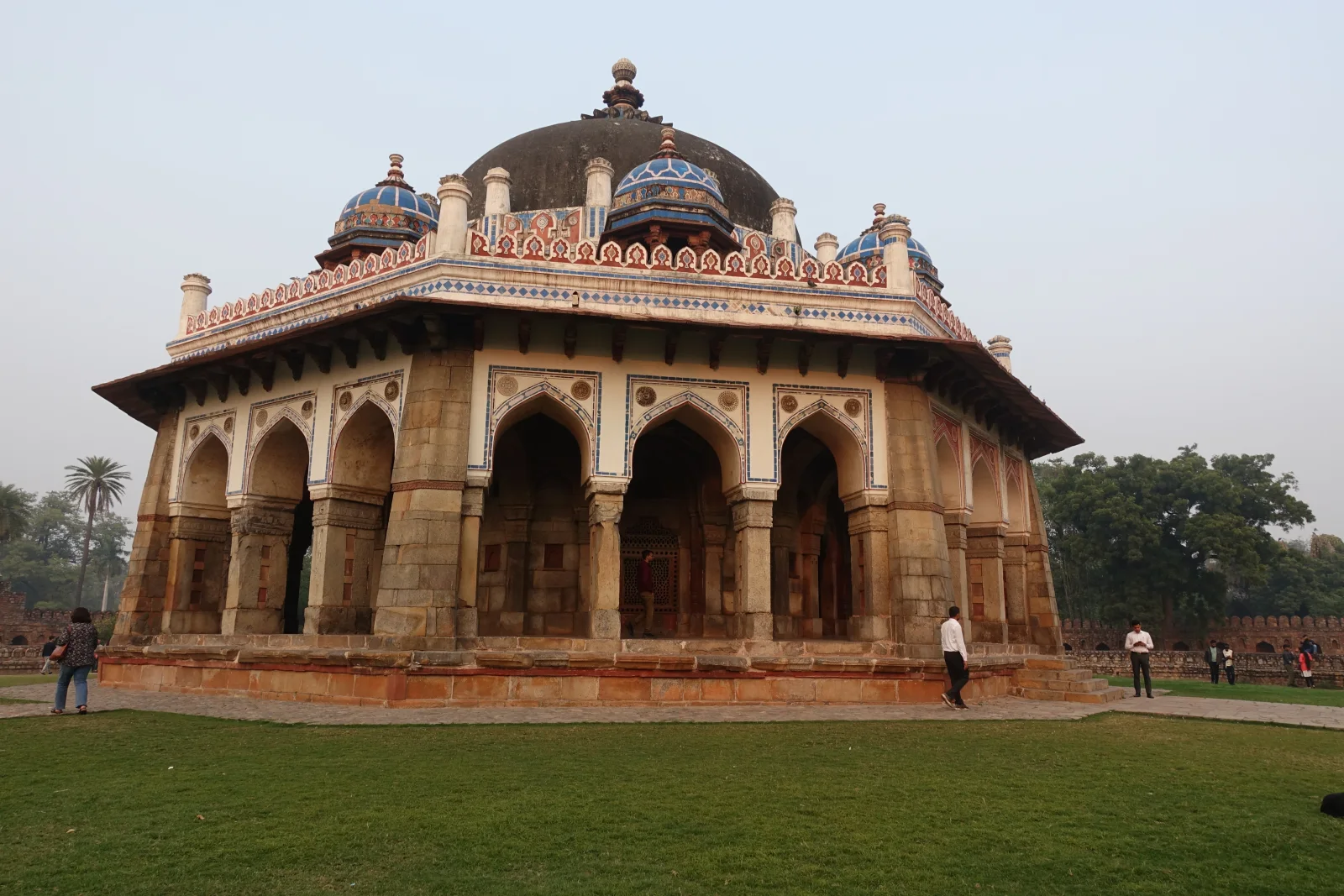
- Isa Khan's Tomb, an octagonal tomb built in 1547, even before Humayun's Tomb.
- The Barber's Tomb (Nai ka Gumbad) and the Arab Serai gateway.
- The restored gardens and water channels, brought back to life by a long conservation project.
Good to know:
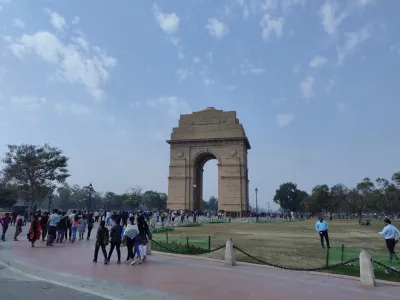
Humayun's Tomb is part of most Delhi sightseeing tours, usually together with Qutub Minar, India Gate and the Red Fort. Allow about one to one and a half hours. Late afternoon light on the red sandstone is especially beautiful for photographs.